

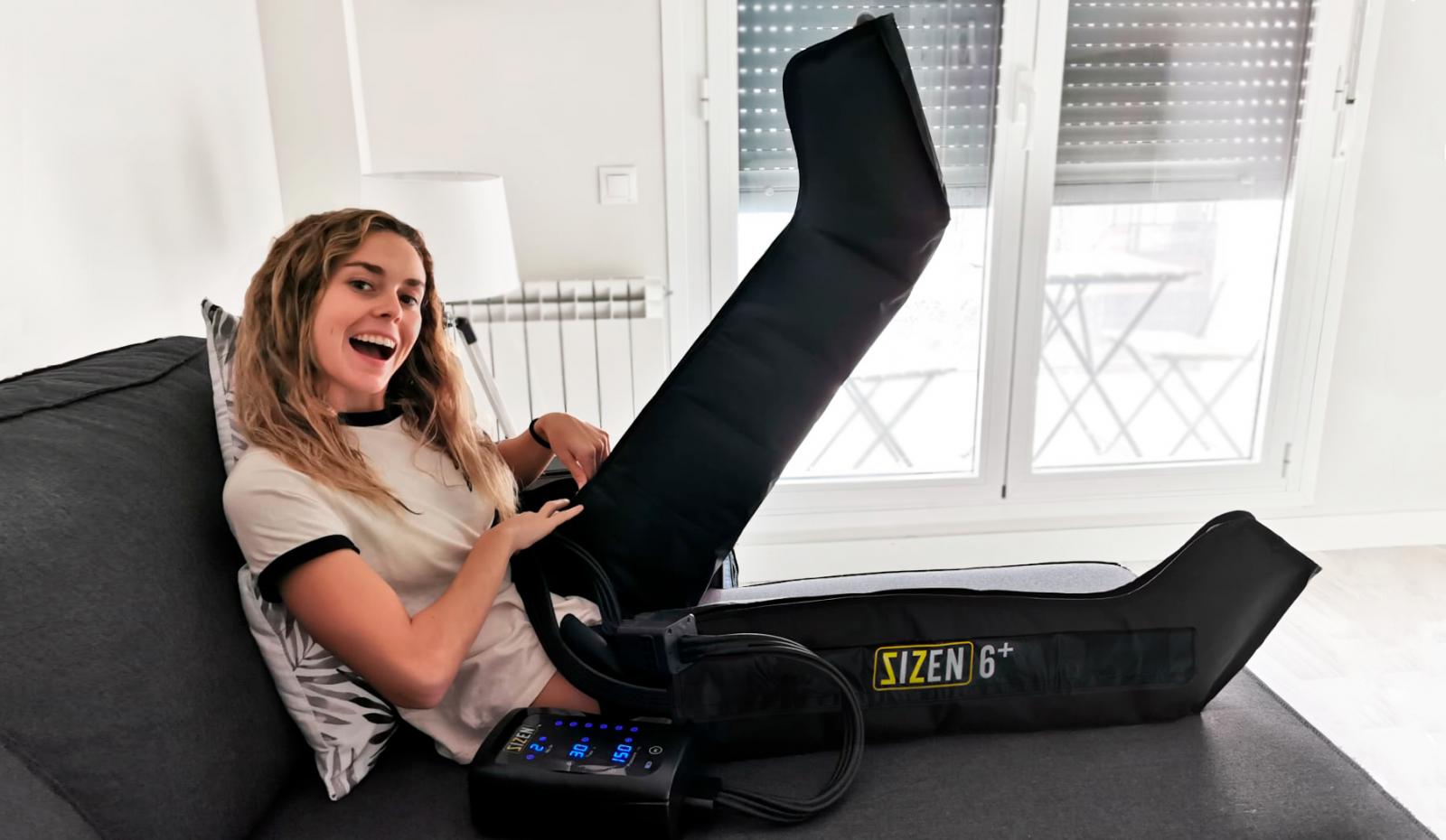

But beware, as harmless as it may seem, pressotherapy is not indicated in certain cases and an increase in lymphatic and blood flow could be counterproductive. Yes, it seems unbelievable and paradoxical that, being performed externally, lymphatic drainage has such a profound impact, right?
So just as we cannot ignore any condition or disease, we should not take pressotherapy lightly.
We have already mentioned some of the main contraindications in other articles, but in this one, we focus exclusively on this matter. Something like a guide to pressotherapy contraindications, as complete as possible.
Obviously, this is not a medical guide and much less an encyclopedia, but it is guidance on the contraindications that should be most considered and the type of specialist you should consult if you suffer from any of these problems.
It is always good to talk to a medical professional about the possible contraindications of pressotherapy. Here is the guide to pressotherapy contraindications…

Contraindications of pressotherapy in circulatory problems
- Deep Vein Thrombosis (DVT): The massage could displace the clot to another area of the body and cause worse consequences.
- Phlebitis: It is a venous inflammation accompanied by blood clots. Applying pressotherapy carries the same risk as if we have thrombosis.
- Deep pelvic vein thrombosis: For the same reason as the two previous conditions, the clot could move.
- Atherosclerosis: Pressotherapy could rupture blood vessels or spread the clots associated with this condition.
- Hypertension: Pressotherapy can increase already high blood pressure.
- Hypotension: The opposite of hypertension. In certain cases, a low-pressure massage can facilitate slow and insufficient venous return, but it is best to consult a cardiologist or angiologist (specialist in the venous and arterial system) before using pressotherapy.
- Venous Insufficiency III: Stage 3 venous insufficiency is already severe and chronic. It has generally developed varicose disease – permanent dilation of the veins – a valve alteration in the veins, and thrombosis.
Contraindications of pressotherapy in liver, kidney problems, and viral/bacterial inflammations
- Liver failure: Poor liver function, usually caused by the Hepatitis virus or the use of medications like Acetaminophen. You should not use pressotherapy until the virus has been eradicated or liver function corrected.
- Kidney failure: Liver failure often also leads to kidney failure or may have other causes. Pressotherapy could help but also worsen the situation. Its use is risky in severe failure or if you are undergoing dialysis to evacuate urine that your kidneys cannot process. This process also filters part of the lymphatic fluid – lymph – so increasing drainage already enhanced by dialysis could further imbalance your lymphatic system. The specialist you should consult is the nephrologist.
- Urinary or bladder infection: As with any other infection, pressotherapy can spread and further stimulate the infection.
-
Diabetes: A chronic and very delicate problem. Depending on the type and general health condition, pressotherapy may be beneficial or not. While many diabetic people with a stable condition and healthy skin benefit from massages, there are significant risks.
A massage covering a large part of the body can alter blood sugar and even trigger a hypoglycemic episode. Studies show a drop of between 20 and 40 points. And be careful if there is peripheral neuropathy.
It affects nerve sensitivity, potentially causing pain or, on the contrary, preventing the perception of applied pressure. A high percentage of diabetic people also suffer from neuropathies, especially those who have had the disease for 25 years or more. Lack of sensitivity or intense pain usually affects the nerves farthest from the brain – in the extremities – so using pressotherapy can be risky. Make sure to consult an endocrinologist. - Acute inflammation: Some viruses, bacteria, poisons, or allergens cause acute inflammation with redness, pain, and fever in the affected area. The infection must be treated before the lymphatic drainage removes contaminants, viruses, or bacteria into the lymphatic channels and spreads throughout the body, as it has its own elimination system through phagocytosis, which is the process by which certain cells digest harmful particles.
Contraindications of pressotherapy in heart problems
No heart disease or coronary condition tolerates pressotherapy, as it stimulates circulation and demands greater effort from the heart. You should also refrain if you have a pacemaker implanted.
-
Angina pectoris: Disease caused by deterioration and obstruction of the heart arteries (coronary arteriosclerosis), due to the accumulation of cholesterol and lipids – fats – in them, preventing the heart from receiving enough blood.
As with hypertension, which can also contribute to angina pectoris, pressotherapy is not recommended because it requires extra effort from a weakened heart.
Contraindications of pressotherapy in abdominal problems
There is a risk of worsening an intestinal disorder when suffering from inflammation or intestinal obstruction, diverticulosis, or irritation or infection in the bladder.
- Abdominal aortic aneurysm: It happens when the lower part of the body's main artery, the aorta, weakens and inflames. If this is your problem, you risk arterial rupture. This can cause intense and persistent abdominal pain, back pain, buttocks and leg pain, dizziness, nausea, vomiting, sweating, and cold or low blood pressure. It is also a circulatory problem, so medical and even surgical intervention is required before using pressotherapy.
- Leaky gut: When you lose bacterial flora, toxins pass through the intestinal tissues and migrate outside of it. This condition can be temporary or caused by more serious illnesses. If there is no more serious disease such as lymphoma, you should be able to restore your flora and balance the bacterial population before using pressotherapy. Abdominal edema could also have been caused. It is the body's way of protecting its tissues and organs. This edema is delicate because all the toxins that have passed through the intestines are floating in it. Be careful because we could worsen the situation. In severe cases, a cannula might be inserted to extract the fluid. It is advisable to consult a gastroenterologist.
- Diverticulosis: It occurs when bacteria or feces get trapped in the colon or large intestine. It is characterized by a bacterial imbalance and causes abdominal pain, fever, and irregular bowel movements and evacuation. Half of the population suffers from it after the age of 60. You should consult a gastroenterologist.
Contraindications of pressotherapy in lymphatic diseases
-
Lymphedema: Accumulation of lymphatic fluid in tissues. It can be primary or congenital, involving a deficit of lymphatic vessels and lymph. Thus, other tissues do not receive enough. It can be present from birth or appear at different ages. Or it can be secondary, benign or malignant. The benign form may be caused by inflammation, trauma, drug treatment, or parasites, and the malignant form by a tumor compressing the lymphatic vessels. Women who have had breast cancer and whose lymphatic vessels have been destroyed by surgery often suffer from secondary lymphedema.
Depending on each case, pressotherapy may or may not be used. Other lymphatic problems may include infections, blockages, or cancer. If you have lymphatic issues, consult an angiologist or a vascular surgeon specialized in lymphatic pathologies. In this pressotherapy contraindications guide, you will find other pathologies.
Contraindications of pressotherapy in other diseases
- Sudeck’s Disease or Inflammation: This is a complex regional pain syndrome affecting the limbs (feet, legs, arms, and hands). The cause may have been a disease or injury that indirectly damaged a nerve in the affected area. This type of intense pain usually does not tolerate pressotherapy massage well.
- Scleroderma: It is a complex group of diseases that can affect only the skin or various organs and systems. One of its common manifestations is the hardening and tightening of the skin and connective tissues. It also often damages blood vessels. Therefore, pressotherapy is not recommended.
-
Spastic Paresis: It is a rare paraplegic disease that can be hereditary. It involves motor neuron degeneration, causing muscle stiffness, leading even to permanent finger retraction and progressive weakening of arms and legs.
Although pressotherapy as well as various physiotherapy treatments can greatly help people with many types of paraplegia or paralysis, it is best to consult a specialized doctor before considering pressotherapy as an additional rehabilitation tool.
The therapeutic approach to this type of paralysis usually involves a multidisciplinary team made up of neurologists, physiotherapists, and traumatologists. - Tuberculosis: Infection caused by a bacterium that forms nodules or tubercles in tissues, affecting various organs and especially the lungs. Fever is one of its symptoms. We cannot apply pressotherapy while there is any bacterial infection, and fever precisely indicates infection of any kind. We must consult a pulmonologist.

Contraindications of pressotherapy in skin or tissue problems
- Acute eczema, skin rashes, sores, tissue damage – in tissues – such as in dermatoliposclerosis, leg ulcers, or open wounds both external and internal – caused by surgery – can worsen with pressotherapy.
- You should also not apply it over an area that has received punctures or injections. Pressotherapy stimulates lymphatic and blood circulation, which could spread any infection. Consult a rheumatologist if you have suffered a bone fracture or have osteoporosis before using pressotherapy.
- Tattoos: If you have been recently tattooed, it is better to wait some time for the skin and tissues to recover from the puncture and inflammation. If you have no health problems, a healed tattooed skin is not incompatible with pressotherapy!
Contraindications of pressotherapy in hormonal disorders
- Hypothyroidism or hyperthyroidism: Disorder of the thyroid gland, located in the neck. The first means there is less hormone production and the second means there is more. Its hormones determine the pace and function of the entire metabolism. Pressotherapy can be done if the problem is under control. There are pharmacological treatments that compensate for or stabilize the hormone production of this gland. Hyperthyroidism can also cause angina pectoris, and both problems may be linked.
Contraindications of pressotherapy in cancer and oncological treatments
If you have cancer or a malignant tumor or are undergoing oncological treatment, pressotherapy is not for you. It could facilitate the release of more free radicals and even accelerate metastasis.
- Neoplasia: Abnormal formation anywhere in the body of a tumor tissue that can be benign or malignant. It is not always synonymous with cancer. Until its nature is determined, we cannot be sure if we can use pressotherapy. The oncologist is the cancer and tumor specialist who can clarify this for us.
Contraindications of pressotherapy in children and adolescents
Pressotherapy can only be used from 18 years of age. This is the age at which, nowadays, we reach biological maturity on average. Before this, the body is still developing and hormone production is unstable.
Contraindications of pressotherapy in the elderly
From 70 years old, pressotherapy can be applied but at a pressure below 120 mmHg. Depending on each person's health, a geriatric doctor can advise on this.
Contraindications of pressotherapy in obese individuals
An adult with a body mass index – BMI – between 30 and 39.9 is considered obese. A 40 or above is considered extreme obesity. And when the overweight is even greater, it is morbid obesity. Pressotherapy would not only have no noticeable effect in these physical conditions, but obesity is associated with multiple problems of circulation, lymphatic system, heart, etc.
An obese person should immediately consult an endocrinologist. In several stages, their treatment will also involve a thorough diet, exercise, and finally surgery. Only with an ideal weight or a few extra kilos is pressotherapy advisable and offers visible and tangible results.
Possible adverse effects of pressotherapy:
On rare occasions and depending on each condition, high pressure can cause muscle pain or slight irritation - redness - in some areas where the compression garments have been in closer contact with the skin.
We hope this guide on pressotherapy contraindications has been useful and informative. The greatest commitment of SIZEN is that people benefit from its pressotherapy always with responsible use regarding their health and physical condition. Now you know that in certain cases your body could tolerate and even appreciate a pressotherapy treatment, but in others it is better to abstain.
This guide has also been written to clear up doubts when purchasing a pressotherapy device for home use, whether for yourself or for someone else whose health condition is not entirely satisfactory and you believe could improve thanks to better lymphatic drainage and circulation.
In any case, we wish you and your loved ones a long life accompanied by the best possible health. This concludes the guide on contraindications of pressotherapy; without a doubt, we have clarified many possible doubts about the uses of pressotherapy.

Share:
Pressotherapy Results: Before and After
What pressure is recommended for Compression Therapy?