

Lymphedema and lipedema are two quite common problems that can affect both men and women, although women are usually more genetically predisposed. But let’s not confuse lymphedema and lipedema. They sound similar but are different problems. We will explain what each one is and how we can treat them with a series of good tips.
And of course, we also answer a question that if you have any of these problems, you’re probably asking yourself: Are lymphedema and Compression Therapy compatible? And lipedema and Compression Therapy? It seems that they are! So if you are affected by lymphedema or lipedema or even both, keep reading because you will be able to significantly improve your condition. But first, a brief lesson about the lymphatic system.

How does the Lymphatic System work?
The lymphatic system is connected to the circulatory and immune systems. It consists of a complex network of lymph nodes and vessels designed to filter and cleanse toxins, metabolic waste, fats, and fluids accumulated between tissues, keeping the body clean and detoxified. Through the lymphatic ducts, lymph flows, a fluid that travels throughout the system carrying immune cells and proteins as well as fats or waste products to the lymph nodes. The lymphatic vessels, in turn, maintain fluid balance in the body by transporting filtered lymph back into the bloodstream. Understanding how the lymphatic system works is crucial to understanding lymphedema.
What is lymphedema? And lipedema? Why do they occur?
We should not confuse lymphedema and lipedema. Although both problems can occur at the same time, they are distinct. Let’s get started!
Lymphedema is a lymphatic dysfunction; that is, a malfunction of the lymphatic system. The tissues become flooded, causing swelling and pain. It mostly affects arms and legs, often just one of the two limbs. To summarize the most important points about lymphedema:
- Lymphedema is a disorder of the Lymphatic System.
- There are two types, Primary or Hereditary Lymphedema: Some people are born with an incomplete lymphatic system, with fewer lymph nodes or with larger diameter vessels. That’s why we see children and young people with lymphedema.
- Secondary Lymphedema: Cancer therapies may involve removal of lymph nodes or dissection of their vessels. Other causes can be: radiotherapy, burns, wounds or major trauma, surgical complications, infections, chronic venous insufficiency, obesity, or filariasis, a parasite that invades the lymphatic system.
- Lymphedema can be treated with compression garments.
- Surgery can be applied in severe cases, including lymph node transplantation.
- Lymphatic blockage causes inflammation and tissue damage.
- It can affect both arms and legs and commonly affects only one arm or one leg.
- In rare cases, distal lymphedema occurs, affecting the forearm or a hand.
- Obesity considerably worsens lymphedema, and morbid obesity can also be the cause.
Now let’s see what lipedema is:
- Lipedema is a disorder that causes dystrophy due to localized fat deposits in the legs – thighs and ankles – or arms.
- It is generally suffered by girls and adult women.
- It can be congenital, affecting several family members.
- Liposuction is the most effective, though not definitive, solution.
- It usually affects both arms or legs.
- Fat deposits are usually painful to the touch. Over time, they harden, becoming encapsulated between tissues.
- It can cause skeletal/bone problems over time.
- It may or may not be associated with some degree of obesity. Thin or athletic women can see their figure and physical condition aesthetically affected by this localized fat accumulation.
- In any case, obesity worsens lipedema.
- It can be due to hormonal disorders, Type II Diabetes, or polycystic ovaries.
- It can appear during puberty, pregnancy, or menopause.
- It can be associated with lymphedema, especially in the legs.

Can lymphedema and lipedema be cured?
Lymphedema is usually chronic and unfortunately, it does not heal. The same goes for lipedema. But if you suffer from either of these conditions, don’t give up. You can keep them under control. In less severe cases, due to bad habits and as long as we are talking about lymphedema in its first stage, you could reverse the process through massages with compression bandages, physical exercise, and above all, a lot of consistency. When it is already incurable, chronic, and advanced, you will need to be even more consistent with the treatment to prevent it from worsening.
Regarding lipedema, the most effective method to get rid of it is undoubtedly liposuction, but don’t forget that if you don’t maintain healthy habits after the procedure, the fat returns and triumphantly settles again in the same place. Can lymphatic drainage from Compression Therapy help you keep lymphedema or lipedema under control and limit their severity? Yes. In fact, lymphedema and Compression Therapy can be compatible just as Compression Therapy and lipedema can be. And of course, you can reduce their impact if you combine Compression Therapy treatment with the healthiest possible lifestyle.
Tips to treat and improve lymphedema and lipedema
Now that we have explained the differences between lymphedema and lipedema, we give you a series of tips that can apply to both problems, keeping them in check and preventing them from worsening.
H2O. Drink between 1.5 and 2 liters of water daily. Make sure a good part comes from fruits and vegetables. Choose fruits low in fructose: strawberry, banana, melon, orange or tangerine, grapes, kiwi, avocado… And never think that drinking less means retaining less. Quite the opposite. If you hydrate poorly, the body stores all the water it can, so even if you have retention problems, never leave your body without its daily hydration.
Diuretics. If you suffer from a lot of fluid retention, there are diuretic pills - medication prescribed by a doctor - that help eliminate a good amount of fluid temporarily. There are also preparations made from natural ingredients like artichoke that you can take occasionally. There are also herbs with strong diuretic power. Consult a homeopath, research online, or visit an herbalist. Natural diuretics are also excellent detoxifiers.
Apple cider vinegar. Another excellent detoxifier for the lymphatic system. Its potassium content dissolves mucus and toxins. It also detoxifies the liver.
What do you eat? Both lymphedema and lipedema require very balanced and specific nutrition if you really want to keep them in check and ease their symptoms. Remember: “You are what you eat,” and if you have such a problem, your diet should be even more meticulous.
SALT. The less, the better. It retains fluid and raises blood pressure, which worsens both conditions. Get used to eating without salt. In fact, it’s the healthiest option.
YES A wide variety of fruits and vegetables, fermented foods, legumes, cereals - preferably whole grain -, nuts - preferably raw and unsalted -, kefir, yogurt, almond or soy milk, tempeh, tofu, green smoothies.. You can also enrich your diet with herbs, seeds, or spices.
Moderation. With meats, poultry, eggs, or fish. Choose the leanest options and don’t overuse prepared fruit juices, carbonated drinks, or alcohol.
Avoid as much as possible: gluten, pastries and added sugars, fried foods, energy and sugary drinks, dairy. Occasionally is fine, but don’t overdo it. We know it’s hard; we are surrounded everywhere by harmful and ultra-processed foods…but there is an alternative cuisine that has always been the healthiest: homemade with the most natural products possible.
Adapt your diet if you have vegetarian or vegan preferences or if you are gluten intolerant, have food allergies, or suffer from diabetes. In any case, it’s a good idea to consult a qualified doctor or nutritionist specialized in treating lymphedema or lipedema.
Supplements. Algae like spirulina, nori, wakame, chlorella… Cleanse the body while providing minerals, vitamins, and other highly beneficial compounds for the body.
Physical exercise. Give up on a sedentary lifestyle? Never. Physical exercise keeps your lymphatic system in good condition and burns your fat. Do some cardio to keep your cardiovascular system active and anaerobic exercises that enhance lymph movement in your muscle tissues. In general, sports that don’t put a lot of impact on the limbs will be good for you. And be careful; if your lymphedema or lipedema is very pronounced, exercise moderately. Consult your doctor or a physical therapist to see which sports activities suit you best. It would also be advisable to use compression garments for the affected limbs during certain sports.
Inform your practitioner. Avoid punctures—due to medication/vaccines or blood tests/transfusions—in the area with lymphedema and avoid pressure sleeves used for taking blood pressure. Also, tattoos where there is lymphedema are not recommended.
When traveling by plane. Ask your doctor or orthopedic stores about special garments for lymphedema. They are used before, during, and even hours after the flight to prevent swelling from worsening, acting as a barrier.
Take a deep breath. Yes, just like those who practice yoga or meditation. Sit on the floor facing a sunset with your legs crossed and arms extended, close your eyes, and breathe deeply in and out. It’s not nonsense. It stimulates the lymphatic system.
Elevate your limbs and walk! Whether it’s arms or legs, keep your limbs elevated for half an hour a day. This helps reactivate venous return. Before sleeping can be good. You can also elevate the lower part of the mattress to achieve the same effect. In the morning you should notice less swelling. During the day, walk as much as you can. Sedentary behavior is a great enemy of the lymphatic system.
Avoid very hot showers. They are not good for either lymphedema or lipedema. Sauna in these cases is not a good idea.
Clean skin and nails! This way you avoid infections. Remember that the lymphatic system is very close to your dermis.
NO to tight clothing. Even if you like it a lot, it’s not the most suitable for lymphedema, as it compresses and worsens the affected area.
Lymphatic massage. Since we’re talking about chronic problems, frequent sessions with a Compression Therapy machine can be a good solution. Consult your doctor if this treatment is suitable for you. Although lymphedema and Compression Therapy generally go well together at first, Compression Therapy can have its contraindications.
Is Compression Therapy good for lymphedema? And for lipedema?
As we have already mentioned, Compression Therapy can help treat lymphedema or lipedema, significantly easing the symptoms. In fact, compression and decompression massage has already shown scientifically proven results in patients with lymphedema or lipedema. Now we assume you’re thinking about Compression Therapy devices for lymphedema or lipedema, right? You don’t need a specific machine to treat these problems, but you do need a machine that is good and gives you results. Because a quality Compression Therapy device will serve you both to treat lymphedema and lipedema, as well as provide many other benefits:
- Reduce muscle tension
- Reduce stress
- Relieve muscle/joint pain
- Stimulate the Immune System
- Activate lymphatic/venous circulation
- Stimulate blood exchange
- Drain waste and toxins
- Oxygenate the tissues
- Reduce inflammation and swelling
- Relieve tired legs syndrome
- Reduce a few centimeters of contour
- Speed up muscle recovery after sports
Can you do Compression Therapy every day with lymphedema or lipedema?
Having read that list of benefits, you’re probably wondering if you can do Compression Therapy every day with lymphedema or lipedema. Well; if we’re talking about a home device, there usually shouldn’t be any problem. Half an hour or forty-five minutes of session with moderate pressure shouldn’t cause any health issues, and you can even select the maximum pressure without problem. But be careful, you should adjust the pressure according to your particular case.
It’s best to start with less pressure and try it out. The massage should always be pleasant and never painful. You should also consider that if you have lymphedema or lipedema, you may need to be a bit more consistent for the effects of compression therapy to be noticeable. Also, chronic problems like these present a persistent set of symptoms; that is, you feel more or less discomfort daily.
Therefore, frequent use of compression therapy can provide great relief if you suffer from lymphedema or lipedema. But be careful, don’t obsess either. Maybe using compression therapy about three or four times a week, you’ll already notice significant improvement. In any case, always consult a doctor so they can advise the frequency and intensity that are most appropriate for your case.
Take care of your lymphedema or lipedema at home with SIZEN Compression Therapy
Excluding serious pathologies, SIZEN compression therapy could be your great ally. And this is something we know well, because besides athletes and those who want to use this treatment for aesthetic purposes, there are also many people who use our compression therapy for lymphedema in legs or arms, as well as to reduce contour in areas affected by lipedema.
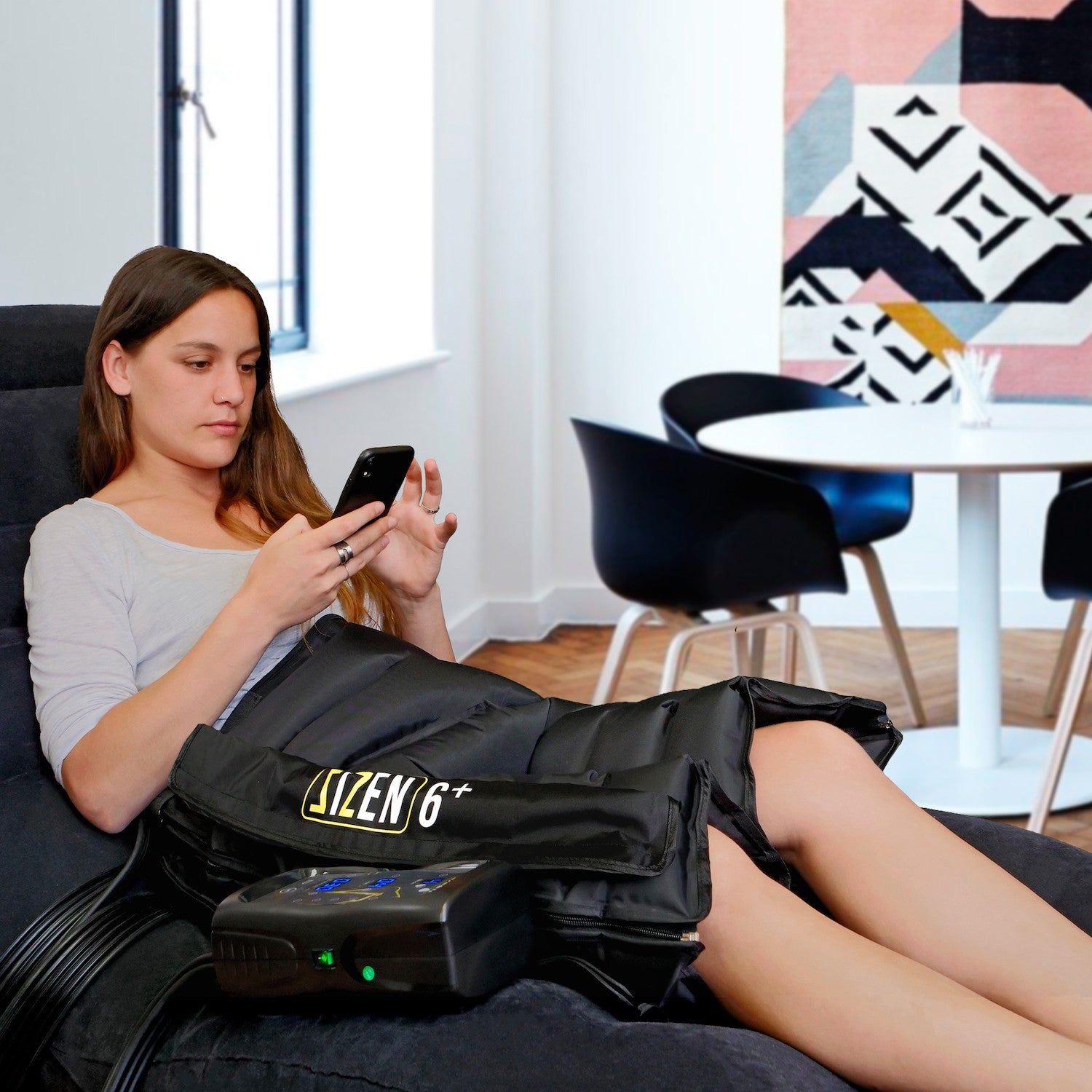
The therapeutic application in lymphatic and circulatory conditions is another strong point of SIZEN home compression therapy, designed to cover treatment for sports, aesthetic, and therapeutic purposes. Visit the store and complete your equipment according to your needs. Besides the machine SIZEN 6+ and the compression therapy boots for legs, you have a whole range of complementary garments with which you can expand your treatment: arm sleeves, ideal if you suffer from lymphedema in these limbs, shorts for buttocks and hips, or an abdominal belt.
And don’t forget that the treatment frequency required for something chronic is much more manageable if you have your own equipment at home. Now that you know compression therapy works, don’t get overwhelmed looking for compression therapy devices for lymphedema or lipedema because you’ll be able to care for both with SIZEN Compression Therapy without leaving your home.
Because people with lymphedema or lipedema also deserve to live a good life!
Share:
Compression Therapy for Arms
How does pressotherapy work?