

Are there contraindications for Compression Therapy during menstruation? These are two questions many women ask before starting to use Compression Therapy. And although it may seem harmless, this treatment can be contraindicated in certain cases, and the period is no exception.
In fact, we make it clear from the start that doing Compression Therapy during the period is not advisable. But don’t stop reading, because although it is not recommended during the period, understood as the bleeding, treating all premenstrual symptoms with Compression Therapy can be very effective.
And because we have seen several articles dedicated to this topic but none really explains well why it is not recommended to use Compression Therapy during the period, we thought it appropriate to focus on this subject a little more deeply, especially justifying the reasons why Compression Therapy is not suitable during the period.
Also, we take this opportunity to give you a series of healthy tips to make those critical days of the month more bearable. So get ready, set… let’s begin!
Menstruation and its effects on the female body
Compression Therapy is a compression and decompression massage that stimulates lymphatic drainage. This is ideal for treating fluid retention and certain circulatory problems. In the days before menstruation or the period, women suffer from some water retention caused by the major hormonal changes typical of this cycle.
It is the less friendly side of progesterone and estrogens, which turn the female body into a real hormonal roller coaster. Fortunately, the woman’s body returns to normal after the period, with retention and inflammation gradually subsiding.
This retention, known as premenstrual edema, commonly occurs in the ankle and the rest of the leg, and even in the abdominal area. Noticing more swollen breasts and feeling quite sharp pain in the legs, both muscular and joint, are also very common symptoms in the days or hours before the period. That's what it means to be a woman, but don’t get upset because despite everything, the period is a symbol of youth, fertility, and life.
Having a regular monthly period, although it can be a nuisance, also indicates that your body is functioning normally and that everything is in place and fulfilling its natural role. We will soon see how all the discomforts associated with the period can be lessened if you know how to treat them. But first, let's briefly review the two most common types of menstrual pain to understand why periods can sometimes be so troublesome:
- Primary Dysmenorrhea: This is the term for painful menstrual periods. Cramps in the lower abdomen and intestinal spasms that lead to frequent bathroom visits are common. The increase of prostaglandins – substances that control blood pressure and the contraction of certain muscles – in the uterus causes a series of contractions – cramps or spasms – that make the first day of the period especially uncomfortable. Primary dysmenorrhea is more pronounced in youth, but with age and as menopause approaches, the pain decreases considerably.
- Secondary Dysmenorrhea: It is caused by certain conditions affecting the uterus or other reproductive organs. A clear example is endometriosis or uterine fibroids. Endometriosis is the irregular growth of the tissue that lines the uterus or endometrium in other organs such as the ovaries or fallopian tubes. This tissue becomes inflamed and bleeds in the same way the endometrium does during the menstrual cycle. Uterine fibroids are benign tumors that appear in different areas of the uterus during the fertile years. They are also known as myomas and rarely develop into cancer. This pain usually worsens over time.

Menstrual pain begins at puberty with the first menstrual periods and becomes less pronounced with age. Many women also feel less pain after giving birth. In the case of a cesarean, some feel more pain in the first few months as ovarian activity reactivates, while others say they barely feel any pain.
This may also be because a cesarean section involves a cut – nowadays generally a transverse one along the pubic line – that intercepts many nerve endings. In other words, many nerves will be severed during the procedure, which will greatly reduce cramps in that area. Leg pain usually persists, however, in a more constant and sharp way just before the period.
Compression Therapy and your period: are they compatible?
Knowing that Compression Therapy fights fluid retention, which is also common during your period, it’s easy to conclude that it can be suitable, but be careful. Although you can use Compression Therapy to relieve certain premenstrual symptoms, this treatment is not recommended once you are experiencing menstrual bleeding.
So, to the question of whether Compression Therapy and your period are compatible, the answer is that you should NOT do Compression Therapy when bleeding has already started.

How to take care of yourself during the menstrual cycle
Because it is important to know how to take care of yourself during the menstrual cycle, SIZEN gives you some tips that will be very helpful if your period is particularly uncomfortable or painful. But remember that Compression Therapy and your period only go well together before bleeding starts. We explain why:
Compression Therapy only before your period: Compression Therapy reduces premenstrual edema, especially concentrated in the legs. But once you have your period, COMPRESSION THERAPY IS NOT RECOMMENDEDThe reason is understandable: Your endometrium is waste from the body. Every month, while you are of fertile age, your body prepares monthly for a possible pregnancy. But if fertilization does not occur, the lining that has coated the uterus detaches in the form of bleeding and remains of tissue and nutrients.
The lymphatic massage from Compression Therapy could direct this waste toward the lymph nodes or bloodstream. Logically, these remains should be expelled vaginally and never through other channels that are not appropriate. This essentially summarizes the contraindications of Compression Therapy during menstruation.
To feel better both during your menstrual cycle and the rest of the month, in addition to the Compression Therapy massage, you can:
- Drink enough water. Good hydration is always key, and if you use Compression Therapy, water is good both before and after the treatment so that toxins, fats, and other metabolic waste flow more easily through the lymphatic channels.
- Go for a walk. Do it during the days before your period starts but also during the days when you already have your period. Moderate physical exercise will also do you good. Swimming or yoga can be very relaxing.
- Properly nourish your body. As with the rest of the month, maintain the healthiest and most nutritious diet possible. Reduce salt – it causes your body to retain fluid – and avoid processed foods.
- Take supplements. Magnesium or vitamin B1 are very beneficial.
- Drink herbal infusions or phytopharmaceuticals. Some herbal infusions relieve menstrual pain: chamomile, cinnamon, ginger, lemon balm, oregano, basil, sage, or hibiscus, among others, have anti-inflammatory and relaxing properties. On the other hand, phytopharmaceuticals are medicines whose active ingredients come from plants and could also help you. A homeopath or naturopath could give you good advice and recipes, or you can turn to countless free digital resources.
- Give yourself a DLMI (Intracavitary Manual Lymphatic Massage). This, which sounds so scientific, is nothing more than a manual massage you can give yourself. It involves gently massaging the lower area of your abdomen. It can relieve pain and stimulate lymphatic drainage in that area. Do it downward, toward your vaginal canal, in a focused way. It has an analgesic effect on the pelvic floor and decongests the genital area. You can also do a circular massage with both palms over your ovary area.
- Apply heat. A hot water shower on the abdomen can be soothing. There are also special heat patches or bags for menstruation available on the market. Their contents heat up upon contact with atmospheric oxygen and maintain a temperature of about 40º for several hours. Or if you prefer something more classic but also effective, use the traditional hot water rubber bag.
How Compression Therapy helps you before menstruation or your period
Through moderate pressure, Compression Therapy applies a gentle and relaxing yet firm massage to both your legs and abdomen, making it a very effective method to combat all symptoms of Premenstrual Syndrome because it helps you:
- Reduce heaviness and leg pain
- Relieve joint pain in the knees
- Redirect edema in the legs
- Soothe inflammation in the abdomen
- Reactivate your lymphatic system
- Relax the entire pelvic area
- Stimulate overall circulation
- Relax your mind by helping yourself sleep better

SIZEN, Compression Therapy in full force
If you’re already lucky enough to have a SIZEN Compression Therapy system at home, there’s little more to tell you about its many benefits and advantages. But if you’re not yet part of that club of very fortunate women, don’t worry because you can join it too. SIZEN makes it very easy for you, both with financing and with a system that perfectly fits your lifestyle.
What’s more, it improves it! And precisely on those days when pampering yourself feels so good for your body, a home Compression Therapy system can offer you the best and most comfortable treatment you can imagine.
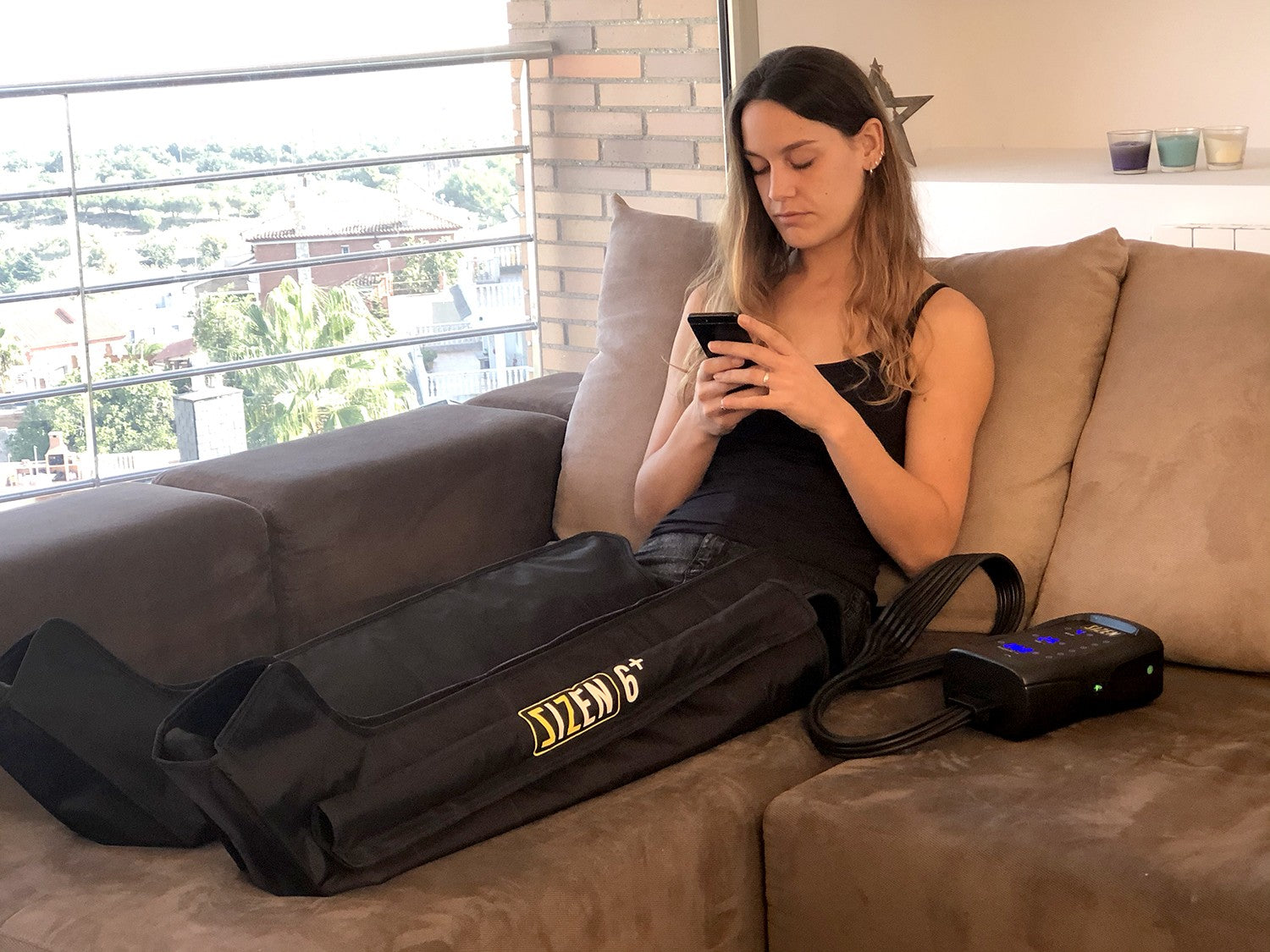
So, why not go ahead and try the SIZEN 6+? For a complete premenstrual treatment, besides the Compression Therapy boots, we recommend using the abdominal belt or even the shorts, which will cover that especially delicate area during those days. A great solution that will ease the pain and discomfort you feel during the premenstrual phase.
Visit our store and choose the equipment with the combination of accessories that best suits your needs. And it’s clear; besides using Compression Therapy in the days before your period, you can keep using it the rest of the month whenever you want and need it.
And remember we’re talking about a “three-in-one” treatment, since its effects can be felt therapeutically, aesthetically, and athletically. A real luxury for your health and appearance. And that has no date on the calendar because feeling good is a wish all year round.
Can you do Compression Therapy if you have your period? Now you know not during, but yes before you have it, which is very helpful to feel better on those days that always annoy you a little each month. And what better way to reward yourself for being a woman and enduring your period and everything else that’s needed like the true champion you are? SIZEN, Compression Therapy in full force, to take care of you both before and after menstruation.
As we always advise, if you have doubts about possible contraindications of Compression Therapy, a medical consultation is never a bad idea.
Share:
The story of Julen Saenz de Ormijana: Overcoming challenges and passion for Trial
The Secrets and Sacrifices of Matteo Alessandroni: From Footballer to Hybrid Athlete