

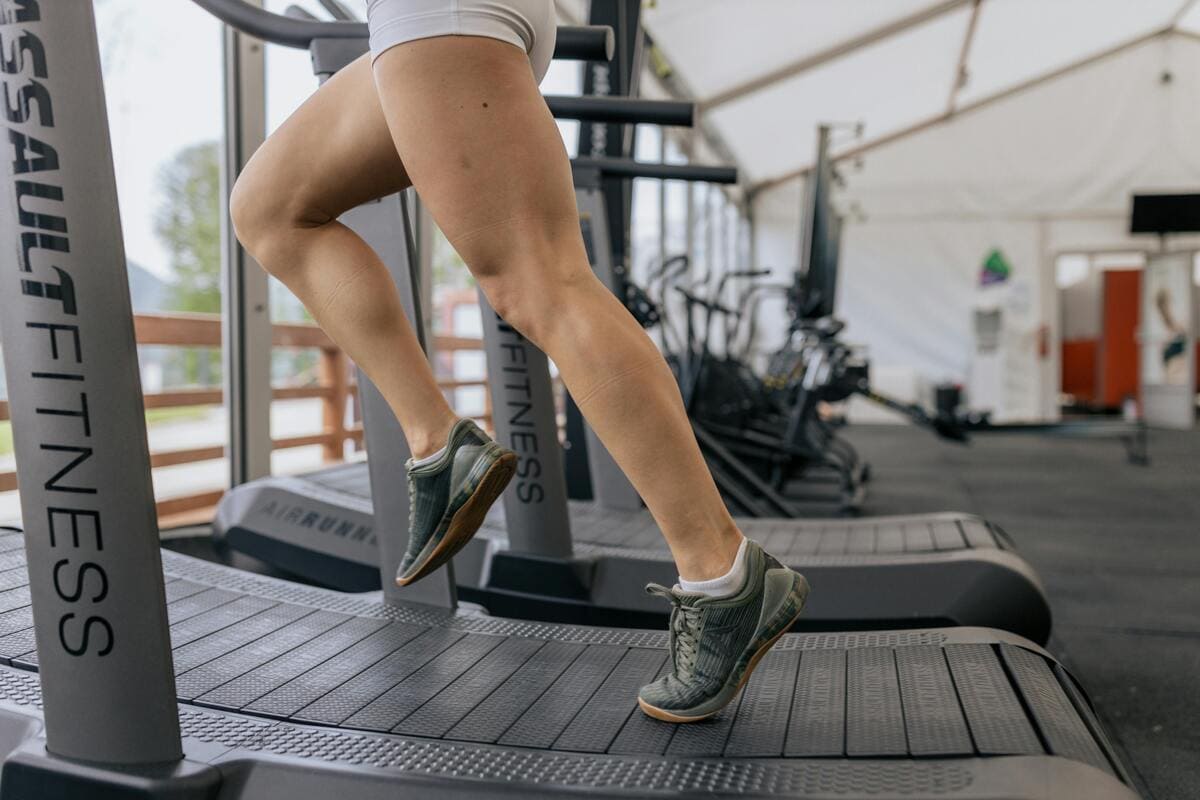
Training the legs is a crucial part of any exercise routine, not only for aesthetic reasons but also for the multiple benefits it provides to overall health.
It is often underestimated compared to other body areas, but it plays a fundamental role in improving physical health and athletic performance. This type of training involves large muscle groups such as the quadriceps, hamstrings, glutes, and calves, which not only help improve strength and endurance but also have a significant impact on metabolism and body composition.
Benefits of training legs
Here are the most relevant benefits of training legs:
Increased calorie expenditure and weight loss
Training large muscle groups, such as those in the legs, requires high energy consumption. This results in greater calorie burn both during the workout and in the recovery period, facilitating weight loss and fat burning.
Improved stability and injury prevention
Leg exercises, such as squats and deadlifts, improve body stability and strengthen stabilizing muscles. This is essential not only to avoid injuries during exercise but also to perform daily activities safely.
Increased strength in other exercises
A solid foundation in the legs is vital for performing other strength exercises effectively. For example, leg strength is key for movements like the military press and barbell row, where balance and stability are fundamental.
Improved body aesthetics
Leg training also contributes to better body proportion. Balanced development of the legs and upper body prevents aesthetic imbalances and enhances overall appearance.
Impact on overall health
Here is the impact leg training has on your health:
Improved blood circulation
Leg exercise is excellent for improving blood circulation, which is essential for cardiovascular health and to prevent issues like swelling and fluid retention.
Reduced risk of chronic diseases
Regular physical activity, including leg training, reduces the risk of chronic diseases such as type 2 diabetes and hypertension. This is due to improved glucose metabolism and blood pressure regulation.
Relationship between leg training and pressotherapy
Learn what pressotherapy can offer you when training legs:
How pressotherapy complements leg training
Pressotherapy, a treatment that uses air pressure to massage the legs, can be an ideal complement for those who train regularly. This treatment improves blood circulation and helps eliminate toxins, speeding up muscle recovery after intense workouts.
Benefits of lymphatic drainage after leg training
Lymphatic drainage is another technique that can benefit those who train their legs. It helps reduce fluid retention and decrease inflammation, which is especially useful to avoid discomfort and speed up recovery.
Key exercises for training legs
Here are some of the best leg exercises:
Squats and variations
Squats are the quintessential exercise to train the legs, working the quadriceps, glutes, and stabilizing muscles. Variations such as barbell squats and Bulgarian split squats add different levels of difficulty and focus.
Leg press
The leg press is ideal for isolating the quadriceps and working with heavier loads safely, especially for beginners.
Deadlift
The deadlift not only works the legs but also the lower back, strengthening the core and improving posture.
Share:
Sports to Prevent Varicose Veins: Improve Your Vascular Health with Exercise
How to Get Rid of Leg Muscle Soreness: Effective Tips