

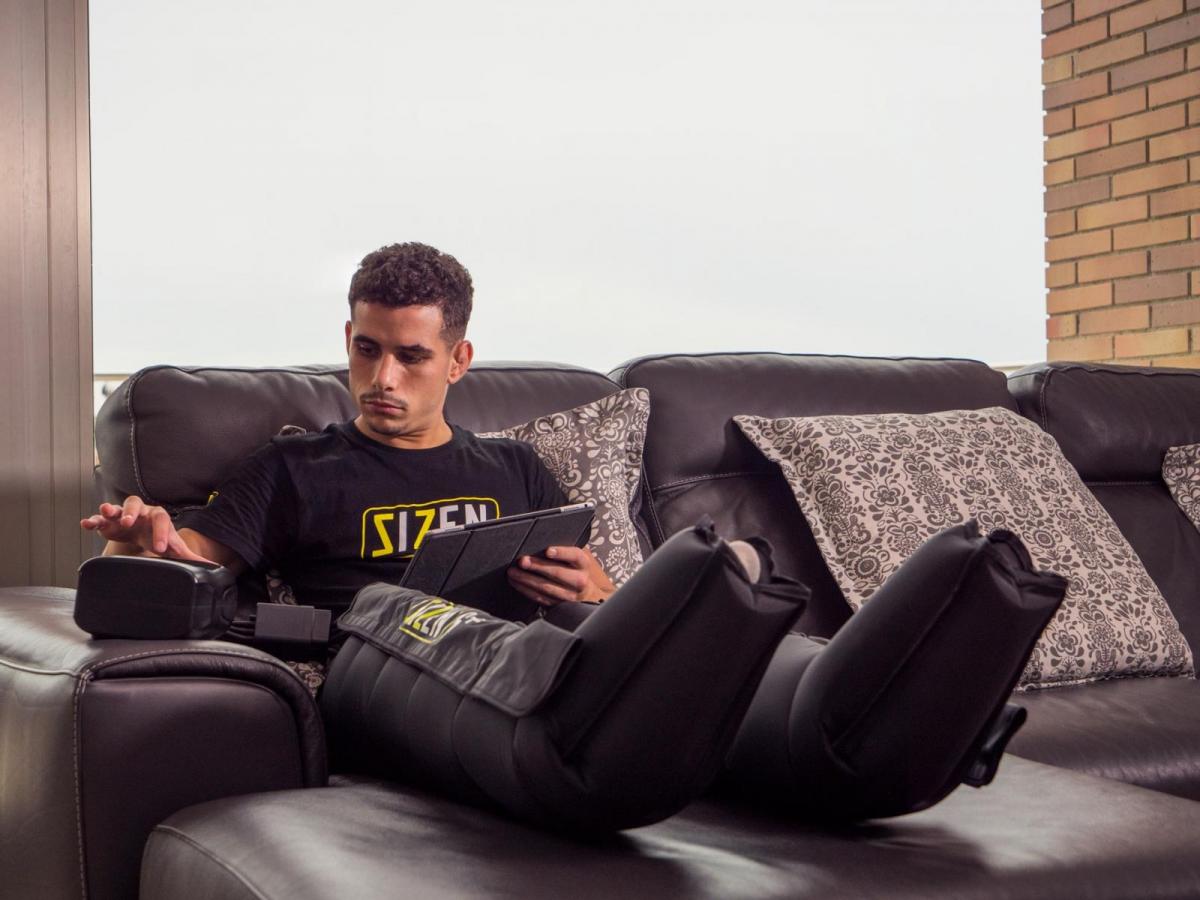
- by SIZEN SRS
Compression Therapy for Tired Legs
- by SIZEN SRS
Do you feel like you can't handle your legs? Do they feel as heavy as sacks of flour? Weakness, pain, tingling, fatigue? If the answer is yes, you should start pampering your legs a little more. Something is not working well, so let's quickly see what associated problems end up causing this condition known in medical jargon as tired legs syndrome. And don't worry, if this is your problem, you will soon see how Compression Therapy and legs combine wonderfully. So much so that you will soon be able to get rid of that weight that tortures you so much.
Articles you might be interested in:
TIRED LEGS SYNDROME: dailments of the lymphatic and circulatory system
Heaviness in the legs, swelling, edema, lymphedema, varicose veins, spider veins, cold feet, legs and hips, pain when pinching the leg… It is usually all related to the same thing: Poor blood circulation and a lymphatic system that is not performing its function well. We have already explained in another article how essential the lymphatic system and its vital fluid are, the lymphWell, many of the discomforts you may be feeling in your legs indicate deficient Lymphatic drainage.
And when your body is not able to properly process all the waste, health problems begin, among them one of the most common, the tired legs syndrome. That said, let's not forget blood circulation either. Poor circulation is usually due to insufficient or obstructed venous return. But whether related or not, both circulatory and lymphatic problems could go hand in hand and lead to multiple pathologies if not addressed as soon as possible.
We have all heard or even asked ourselves, "Why do my legs hurt so much?" And many times we attribute it to simple fatigue. But beware, because if this pain is becoming chronic, the problem is likely much less superficial than we think. Let's see why legs hurt so much and chronically:
The lymph nodes are responsible for expelling fats and toxins from the body. But some factors can interfere and make the job nearly impossible. Sudden temperature changes, poor nutrition, hormonal changes – especially in women approaching menopause – a sedentary lifestyle and lack of physical exercise, or an excess of toxins may be obstructing your lymphatic system. The lymph then cannot eliminate waste, with inevitable and harmful results: slower circulation, swelling, and pain. A nightmare.
And we’re not necessarily talking about elderly people. You can be very young and suffer from tired legs. Nor are we talking exclusively about people with significant overweight. Obviously, excess weight causes heaviness, poor circulation, pain, or fatigue, but it’s not always people with a lot of weight who suffer from heavy or tired legs. And when our body feels pain, it’s telling us it’s not feeling well, that it needs a change. Can a Compression Therapy treatment help eliminate these symptoms? Does Compression Therapy relieve tired legs? Absolutely yes!

But as we always advise, Compression Therapy sessions, although highly recommended for your tired legs, should be accompanied by other measures to keep everything flowing, quite literally. Let’s see what Compression Therapy is good for in the legs:
First, consult a doctor. Have them evaluate your physical condition and confirm if you can follow these tips without risk to your health. If there are no hormonal imbalances, serious heart or venous problems, or diseases that prevent it, Compression Therapy can be the right and reliable treatment to combat tired legs. You may also find it helpful to read our Compression Therapy Contraindications Guide.
Compression Therapy is not just for vain people who care about their appearance. Nor is it exclusively for athletes. Do you work many hours standing? Or the opposite, stuck in a seat? If so, Compression Therapy is as beneficial for you as for anyone else. The tired legs syndrome is the logical consequence of many professions that involve significant sedentary behavior or little mobility.
People who work in hospitality, hair salons, driving public transport, delivery trucks, in secretarial or administrative tasks… All of them sooner or later suffer the toll of their professions on their bodies and especially on their legs. Pain and tingling in ankles, knees, calves, thighs… the whole leg ends up affected. What to do in this situation? The answer lies in improving the lymphatic system with a good lymphatic drainage massage from time to time. And precisely because it works, compression therapy for legs has such good reviews.
You are probably wondering now what the price of compression therapy for legs is. Going to a center for occasional sessions can be expensive, honestly. Considering that one or several massage sessions will have little impact on your legs, no matter how good the offer is and how closely you do them – from 20 euros you can have a session and packs of 10 or more sessions are also offered – the most cost-effective option is definitely to have your own home compression therapy device.
Having to go to a center several times a month is really too expensive for the vast majority of people. So the best option is to pay once and have compression therapy at home whenever you want. There are many devices on the market, with prices that vary quite a bit. Our advice is that if you choose the cheapest ones, you will soon regret it. But you also don’t need to spend what a center would charge for a professional compression therapy device.
A compression therapy device for home use is equally effective even if it has less power. The only difference is that you will need to use it a bit more frequently, but the effects and benefits are the same. And of course, the price is also more reasonable. The SIZEN compression therapy offers you a device that meets your needs, at an affordable price you can pay in installments and that you will quickly get your money’s worth from. Get motivated to try the SIZEN 6+ and you will see how by following our advice and doing sessions regularly, you too will be able to say goodbye to tired legs, regaining your agility and with it the desire to step stronger than ever.
Share:
When NOT to Use Pressotherapy? Contraindications of Pressotherapy
Swollen Ankles? Common Causes and Effective Solutions to Reduce Inflammation