

- by Sizen España
Thermal leg sleeves: When to use cold and when heat?
- by Sizen España
Thermal sleeves combine adaptive compression with thermal therapies to accelerate muscle recovery. Clinical guidelines indicate using cold (cryo-compression) during the first 24–48 hours after intense exertion or an acute injury to reduce inflammation and pain. Heat (thermotherapy) is applied from the third day onward, or before training, to promote vasodilation, relax stiffness, and deliver nutrients to damaged muscle. These anatomical garments outperform traditional ice by reaching the deep muscle layers without causing burns or rebound effects.
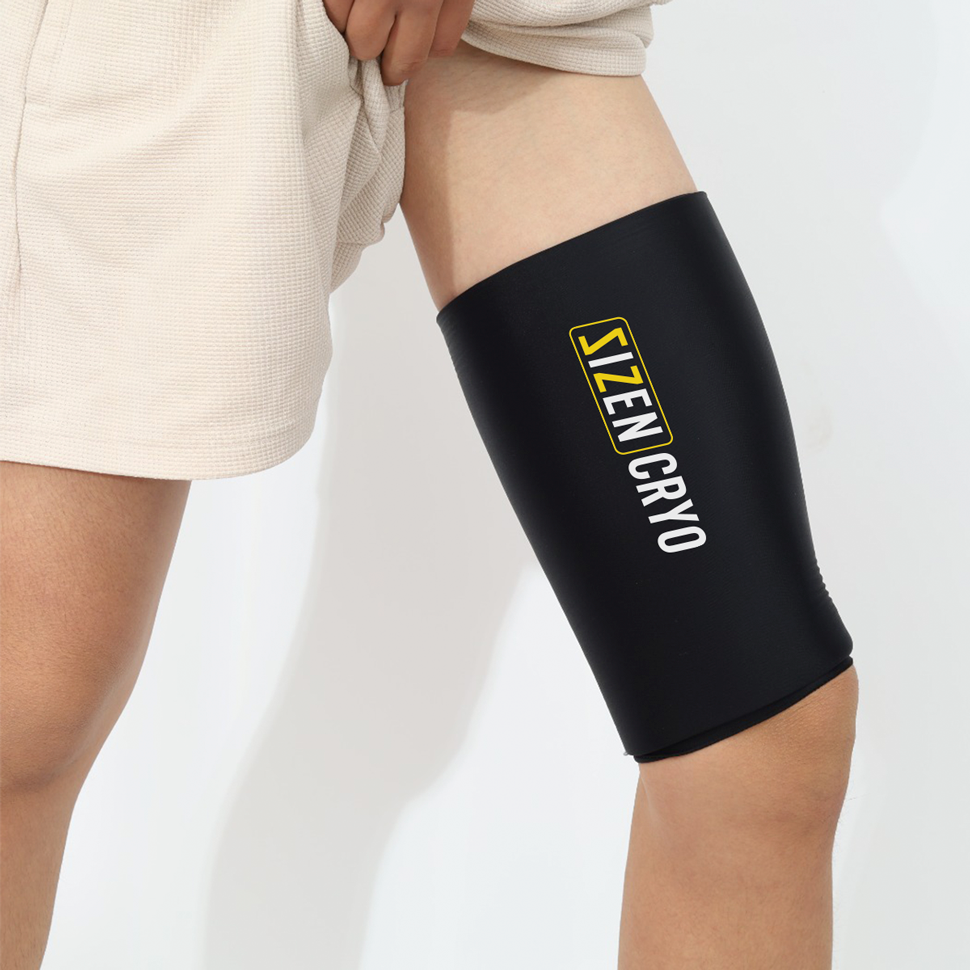
Cold and heat sleeves are anatomical garments specifically designed to wrap the lower limbs—quadriceps, knees, or calves—combining physical compression with thermal-transfer gel (Compact Cryotherapy).
Unlike passive ice or conventional heat packs, they work through thermo-mechanical synergy:
Understanding the timing of cellular physiology is essential to avoid hindering the body’s recovery process.
Cold combined with pressure should be used immediately after muscular stress. Application is recommended:
During the first 0 to 48 hours (Acute phase): After a marathon, a high-intensity match, a sprain, or sudden overuse.
Physiological objective: To cause local vasoconstriction. Cold reduces cell metabolism (preventing cell death due to secondary hypoxia) and slows nerve conduction, producing powerful immediate analgesia.
Heat is used during regeneration and prevention phases, usually:
From 48–72 hours after exercise (Subacute phase), or as passive warming.
Physiological objective: To cause vasodilation. Heat increases collagen elasticity in tendons and fascia, and pumps oxygen- and nutrient-rich blood toward damaged tissue to accelerate repair and eliminate muscle stiffness (persistent delayed-onset muscle soreness).
The RICE method (Rest, Ice, Compression, Elevation) from the 1970s is being reevaluated because passive “I” (ice alone) has proven inadequate. Cryotherapy sleeves outperform loose ice for three reasons validated by sports medicine:
Elimination of the risk of superficial ischemia: Direct ice freezes the skin, triggering a panic response in the body that sends more blood to the area once the ice pack is removed (rebound effect). Thermally stabilized sleeves maintain a therapeutic temperature without burning the tissue.
Simultaneous edema control: A bag of frozen peas on the calf cools it but does not apply pressure. Without pressure, the ruptured blood vessel continues releasing plasma into the muscle. The compression sleeve physically seals this leak, measurably reducing swelling volume.
Faster reduction of deep temperature: Biomechanical studies (Journal of Athletic Training) confirm that adding constant pressure reduces core muscle temperature twice as quickly as simply applying passive cold.
Each injury or chronic pain condition requires a different thermal approach to avoid worsening the clinical picture:
Calf overuse (e.g., Running or cycling): It is advisable to use cold and compression immediately after training to stop microbleeding from torn fibers. If the overuse persists beyond three days without visible inflammation, switch to heat to make the fascia more elastic and relieve the persistent tension in the soleus.
Achilles or patellar tendinitis: Tendons have very limited blood supply. Acute cryo-compression after running reduces pain, but it is heat applied hours before the next session that prepares the tendon’s collagen to withstand the new load without becoming inflamed.
Calf muscle tear (Tennis leg syndrome): Only cold and firm compression during the first three days to contain internal bleeding and the hematoma. Heat is absolutely contraindicated in the early phase because it could reopen the torn capillaries.
To optimize the benefits without causing thermal damage to the skin or blocking natural hypertrophy pathways, clinical protocols recommend:
Cryo-compression duration (Cold): Sessions of 15 to 20 minutes. If repetition is needed, wait at least 1 or 2 hours to allow the tissue to return to its baseline temperature.
Thermotherapy duration (Heat): Sessions of 20 to 30 minutes at a moderately high temperature (between 38°C and 42°C).
Contrast baths (Mixed technique): To reactivate the circulatory system after several days of heaviness, alternate 3 minutes of heat and 1 minute of cold, repeating the cycle 3–4 times and always finishing with the cold sleeve.
Both are advanced technology tools for recovery, but they are not mutually exclusive; they are different phases of the same sports-performance protocol:
| Sports Situation | Thermal sleeves? | Compression Therapy? |
| 0–24 h after a hard impact or acute injury | YES (Cold sleeve). Stops inflammation at its source and prevents edema from accumulating. | NO. Active massage may spread acute inflammation. |
| Recovery days / Active maintenance | NO (except to reactivate local fascia with heat). | YES. Distal-to-proximal massage systemically drains lactate and metabolic waste. |
| Focused application to joints (e.g., knee) | YES. Specifically wraps the ligaments and tendon without massaging healthy tissue. | NO. The boots are designed for vascular sweeping of the entire leg, not trigger points. |
| Pre-competition muscle preparation | YES (Hot sleeve). Promotes vasodilation in the calves while you have coffee before leaving home. | YES (Short cycles). A gentle program stimulates blood flow without fatiguing the muscle fiber. |
If you are looking to treat specific inflammation, immediately protect your joints, or warm up stiff muscles, thermal sleeves are the essential first step. For day-to-day metabolic clearance and overall muscle recovery, Compression Therapy takes over from the second day onward.
Share:
Can I do pressotherapy every day?
Guide to Buying a Pressotherapy Machine: Tips and Recommendations