

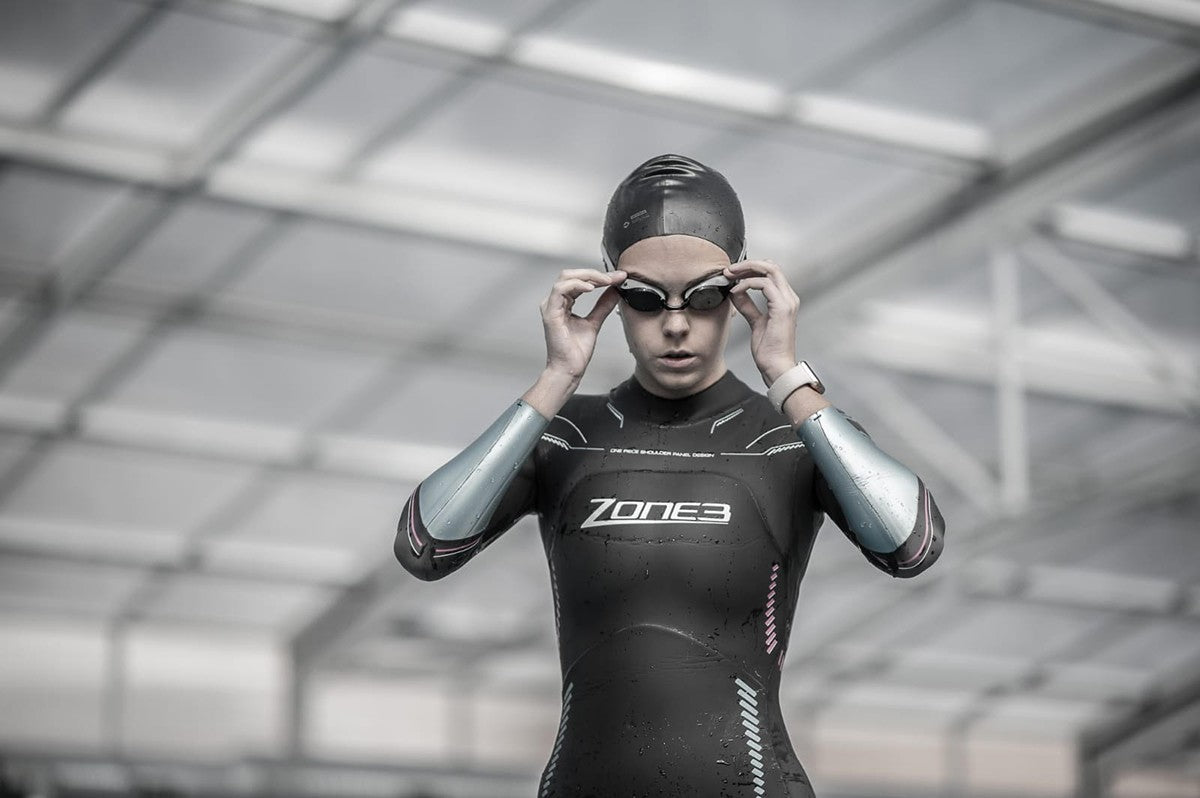

Today I want to talk about my transition from the love of my life (synchronized swimming) to my other great passion… triathlon! I will briefly explain what triathlon preparation is like.

Synchronized or artistic swimming is the sport I grew up with. Artistic swimming has many benefits but in the long run also has many drawbacks. The one I have noticed most is the lack of gravity and impact from having spent so many hours in the water.
That is, when I left synchronized swimming, what I noticed most at first was the impact when running. I started getting injured a lot, especially calf injuries (calf muscle fiber tears), periostitis, and ankle sprains. In the end, my muscles and even bones are not used to that kind of physical exercise like other people are.
Triathlon preparation: It’s gravity!
What causes so many injuries? It’s gravity! Because in water we don’t have it, so there is no impact at all.
That’s why there are fewer injuries in the world of swimming than in other sports like athletics. For the same reason, there are athletes who take the opposite path, moving from athletics to swimming.
Run, baby, run…
How have I managed this transition from the pool to the track? Well… little by little! With a lot of patience, I have managed to control my mind, which in the end is the hardest part. The mind is what tells you that you have to do more (which training intervals really helps with), but inside you know you have to control yourself and hold back a bit.
Gradually I have been adapting to athletics, all thanks to the professionals who support me. I have been able to train running more and more, which without a doubt is the weak point of any swimmer.
Currently, thanks to the pressotherapy machine Sizens+6, I can recover every day after my running training, which is the most damaging workout I do during the week. I don’t always have time to go to the physiotherapist, although I do combine it sometimes. But my Sizen is what saves my life day to day. Although a good physio is also key. If you’re interested, here’s an article to learn how pressotherapy works

Cycling and biomechanics
Regarding the road bike, which is what I use, it’s a discipline that requires many hours of training. It demands a lot of biomechanics to avoid injury from staying in a different position than usual for so long. Not to mention that cursed saddle.
Although it may not seem very tough, the cycling part is generally very competitive in triathlon. Personally, I love it. This is the part that clears my mind for several hours and lets me enjoy nature while exercising. Maybe it’s the part I like the most along with swimming in triathlon preparation.

Mastering swimming
And lastly, my best asset, swimming. Just from spending so many hours in the water, I feel it’s my favorite environment and the one I have the most control over. Unlike people who come from athletics, for them swimming is the hardest part. I’m a mermaid in the water! Although when I trained in synchronized swimming, we didn’t swim like I do now; we mostly did other kinds of exercises in the water. Now I’ve discovered a new way to suffer thanks to my club’s training. Still, I’m in my natural element and where I enjoy myself the most while preparing for a triathlon.
A new triathlon season full of motivation and enthusiasm is coming. I feel very fortunate to have this amazing Sizen ambassador team supporting me at all times. In the end, as important as training is, doing something you like and that motivates you is just as crucial. That’s exactly where I am right now!
Clara Camacho is a two-time world runner-up in artistic swimming and currently competes in triathlon.

Share:
How to Prepare for a Race Psychologically?
Judo self-defense for women